
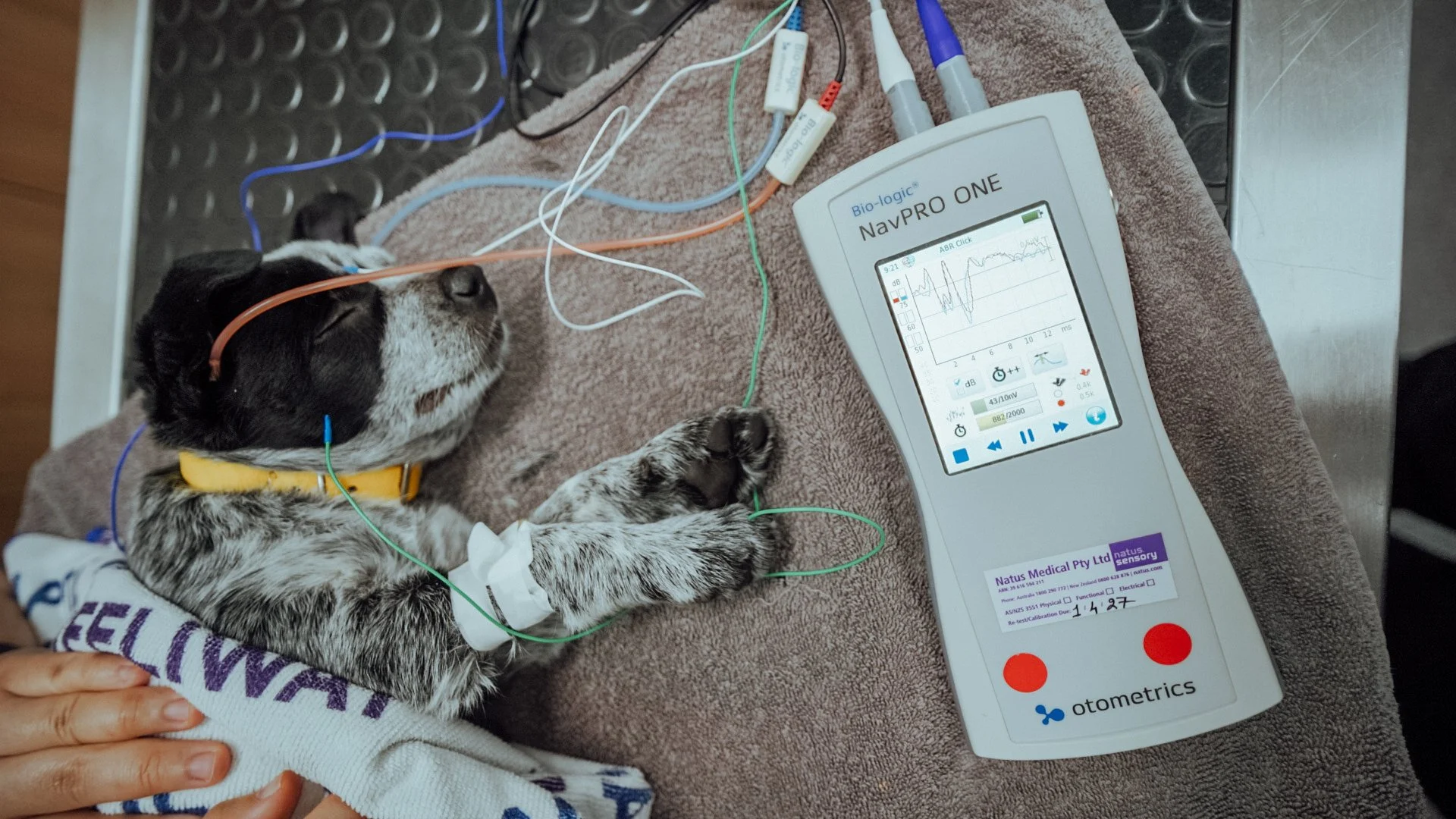
BAER Hearing Testing
Are you concerned that your dog or cat may not be hearing normally? Perhaps your pet doesn't respond when called, sleeps through noises that previously woke them, or you're a breeder who needs to assess the hearing of puppies or kittens.
At Animal Dermatology Clinic, we offer BAER (Brainstem Auditory Evoked Response) hearing testing to objectively assess hearing in dogs and cats.
BAER testing can assess each ear individually and help us determine whether hearing loss is present in one or both ears. It can be performed as a standalone hearing assessment or as part of the investigation and treatment of chronic ear disease, including when your pet is undergoing a video otoscopy and ear flush procedure.
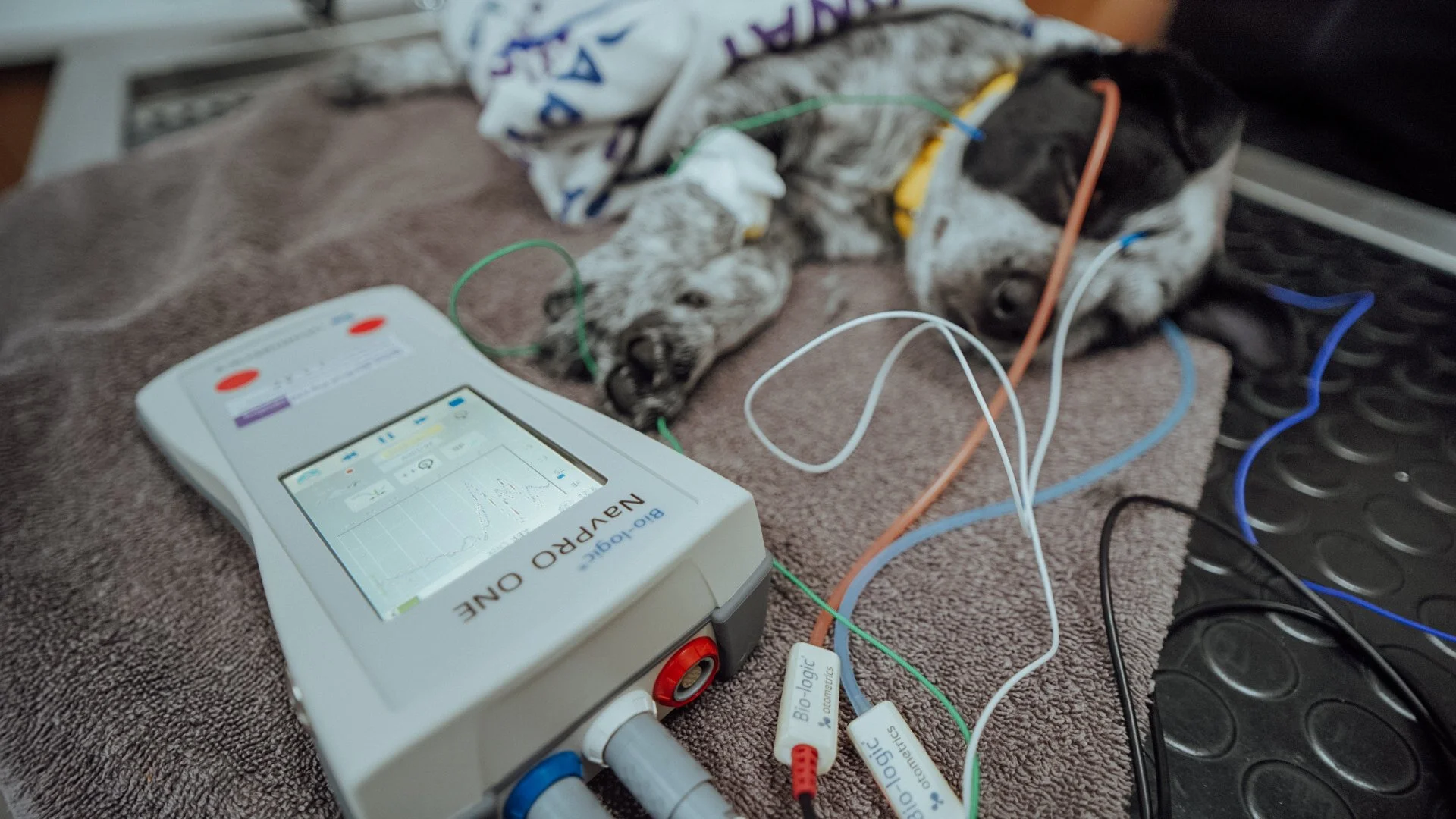
How can we test if my pet is deaf?
Unlike behavioural hearing tests, BAER testing does not rely on watching whether your pet reacts to a sound.
Instead, specialised equipment records the electrical activity produced along the auditory pathway in response to sound.
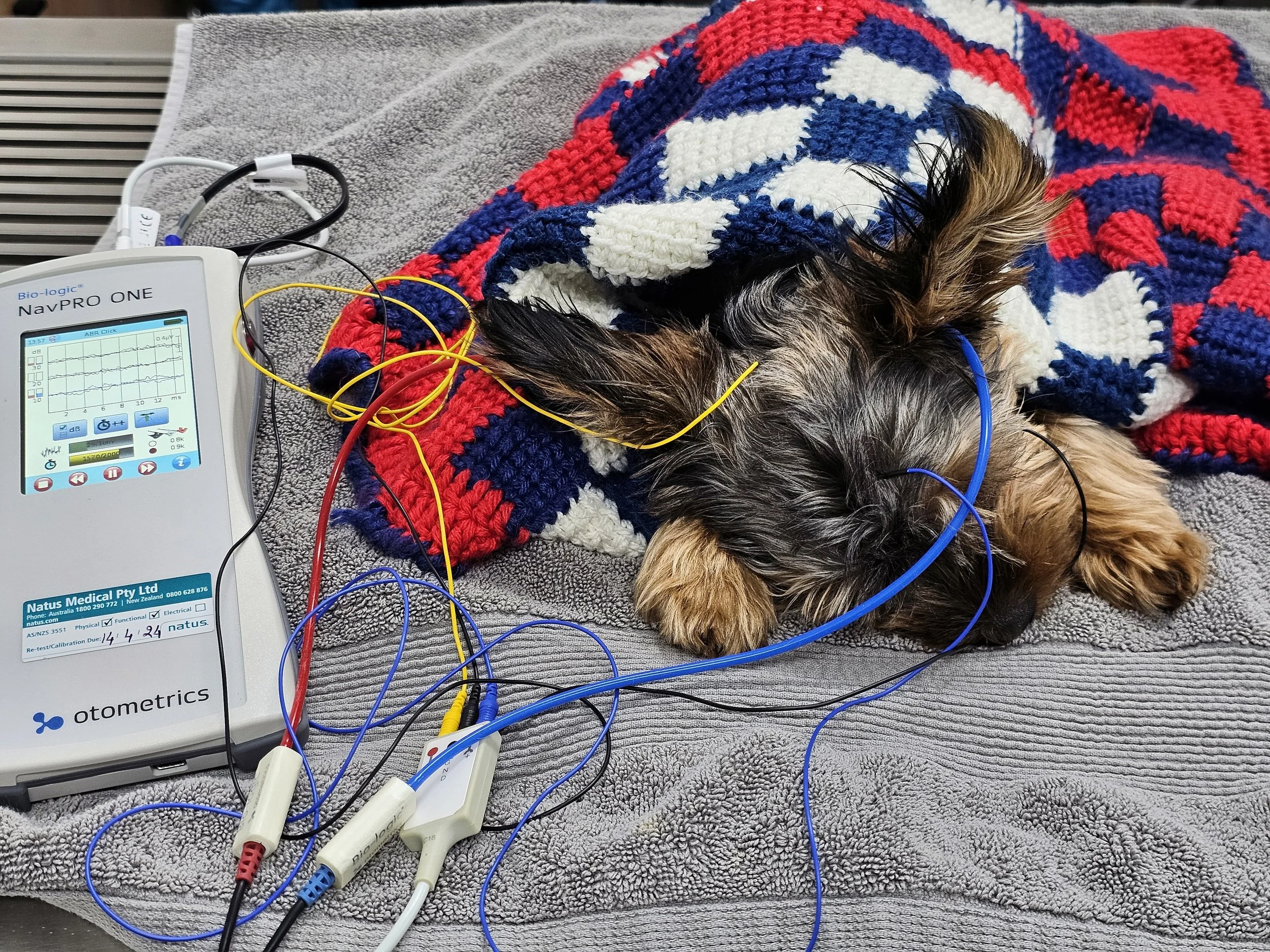
Small recording electrodes are positioned on the head and sounds are delivered through an earpiece. The equipment records the electrical response generated as the sound travels through the auditory pathway towards the brain.
This allows us to objectively assess the hearing response in each ear separately.
What are the signs of hearing loss?
Hearing loss isn't always obvious, particularly when only one ear is affected.
You may notice that your pet:
Doesn't respond consistently to their name or familiar sounds
Is difficult to wake when sleeping
Is easily startled when approached because they haven't heard you coming
Doesn't respond to sounds unless they can also see you
Has difficulty determining where a sound is coming from
Appears less responsive than they used to be
Has a history of chronic or severe ear disease
Pets with hearing in only one ear can compensate remarkably well, so unilateral hearing loss may go unnoticed without objective hearing assessment.
BAER testing for pets with chronic ear disease
BAER testing isn't only used to investigate congenital deafness. Hearing assessment can also be an important part of managing chronic and complicated ear disease.
Long-term inflammation, recurrent infections, changes within the ear canal, problems affecting the eardrum or disease involving deeper structures of the ear can potentially affect hearing.
For our chronic ear patients, we may therefore recommend BAER testing to help us understand how well each ear is functioning.
When your pet is already undergoing video otoscopy and an ear flush under anaesthesia, BAER hearing testing may be incorporated into the procedure when clinically appropriate. This allows us to assess hearing as part of the broader investigation of your pet's ear disease without requiring a separate visit or procedure solely for hearing testing.
Depending on your pet's condition, hearing may be assessed before and/or after treatment. Repeat testing can sometimes help us understand whether hearing has changed following management of the underlying ear disease.
Your veterinary dermatologist will advise whether BAER testing is appropriate as part of your pet's individual ear investigation.
When can deafness occur?
Hearing loss can be congenital, meaning a puppy or kitten is born with it or develops it early in life, or acquired later in life.
Congenital deafness has an inherited component in some breeds and is associated with certain pigmentation patterns. Breeders of dogs with an increased risk of congenital deafness may therefore choose to have puppies BAER tested before they go to their new homes.
Breeds in which congenital deafness has been recognised include:
Dalmatians
English Setters
English Cocker Spaniels
Australian Cattle Dogs
American Bulldogs
Boxers
Bull Terriers
Jack Russell Terriers
This is not a complete list, and congenital hearing loss can occur in other breeds and crossbreeds as well as in cats.
Hearing loss can also develop later in life. Possible causes include chronic ear disease, obstruction of the ear canal, disease involving the middle or inner ear, trauma, exposure to excessive noise, certain medications and age-related changes.
What age can BAER testing be performed?
BAER testing can be performed in puppies from approximately seven weeks of age.
For puppies and kittens being assessed for congenital hearing loss, the most appropriate timing can depend on the individual animal and reason for testing. Our team can advise you on when testing should be performed and whether repeat testing may be recommended.
If you're a breeder planning to have a litter tested, please contact us to discuss the most appropriate timing.
Does my pet need sedation?
At Animal Dermatology Clinic, BAER testing is performed under sedation or anaesthesia, depending on the circumstances.
The test records very small electrical signals, so movement and muscle activity can interfere with the recording. Keeping your pet still and relaxed helps us obtain clear and reliable results.
For pets having BAER testing as part of a video otoscopy and ear flush, the hearing assessment can be incorporated into their planned procedure while they are already under anaesthesia.
Our veterinary team will determine the most appropriate approach for your individual pet.
Will I receive the results on the same day?
BAER results are available on the day of testing. We'll discuss the findings with you and explain whether a hearing response was detected in each ear.
For our chronic ear patients, we'll interpret the BAER results alongside the findings from their ear examination, video otoscopy, imaging or other investigations, giving us a more complete picture of their ear health and hearing.
Are you concerned about your pet's hearing?
Whether you're concerned about changes in your pet's hearing, investigating hearing loss associated with chronic ear disease, or arranging hearing assessment for a puppy or kitten, our team can help. Give us a call. We treat your pet like one of our own. Call now on: +61 08 6277 9430 (Murdoch) and (Balcatta) or email: dermnurses@adcperth.com