

What is CO₂ Laser Surgery ?
At Animal Dermatology Clinic, we use CO₂ laser surgery for a range of dermatological procedures in dogs and cats. It allows our veterinary dermatologists to remove or treat abnormal tissue with a high degree of precision while helping to minimise bleeding and trauma to the surrounding healthy tissue.
What is CO₂ laser surgery?
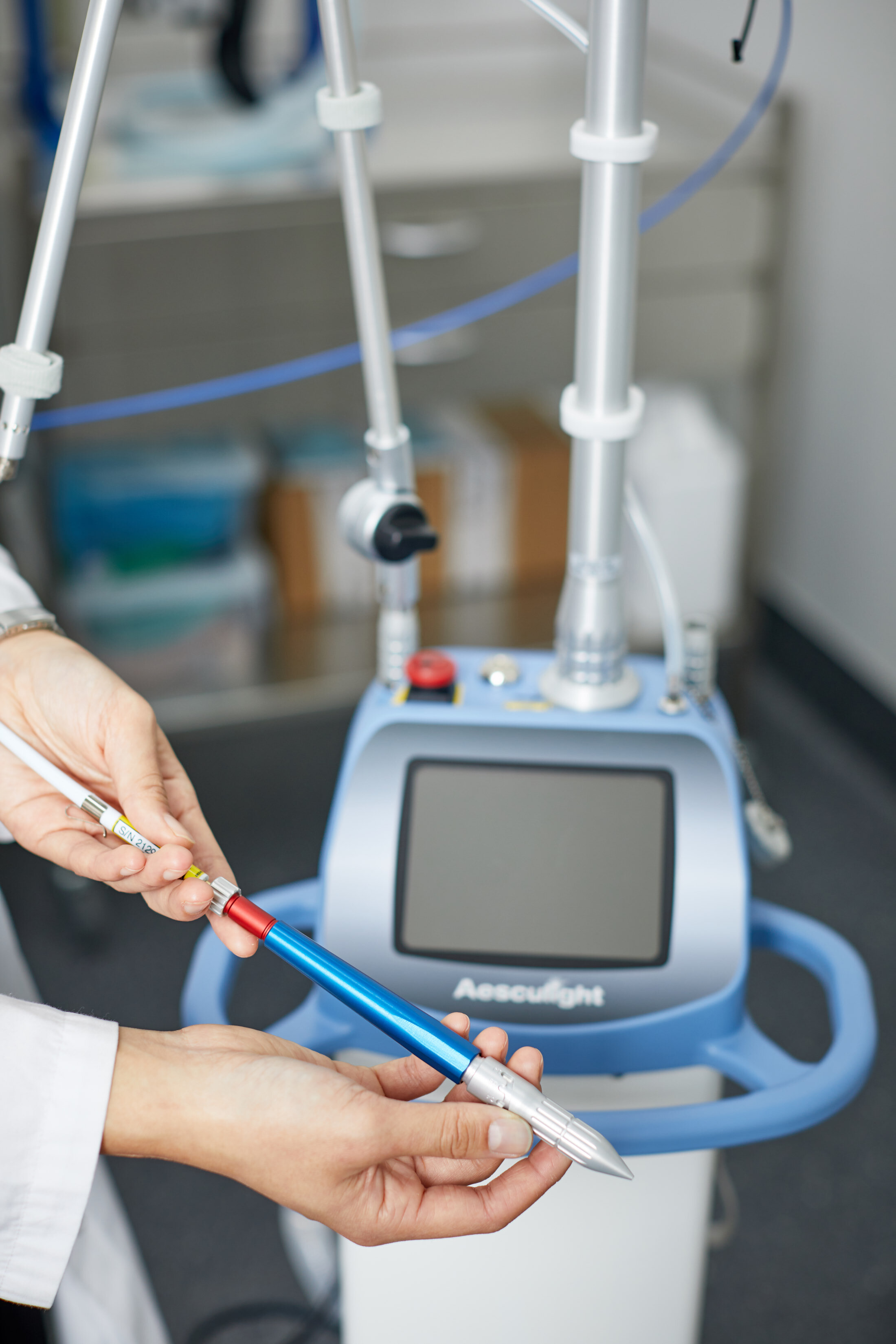
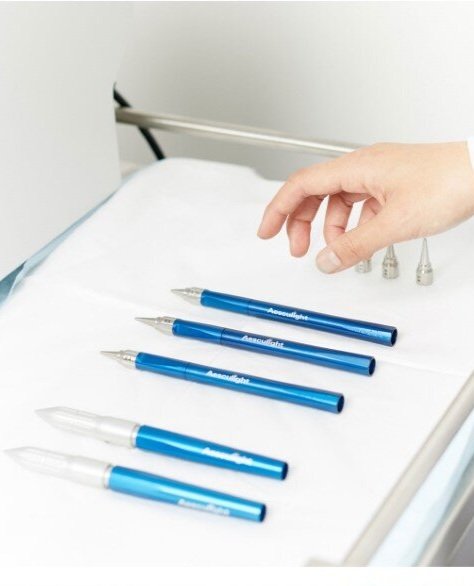
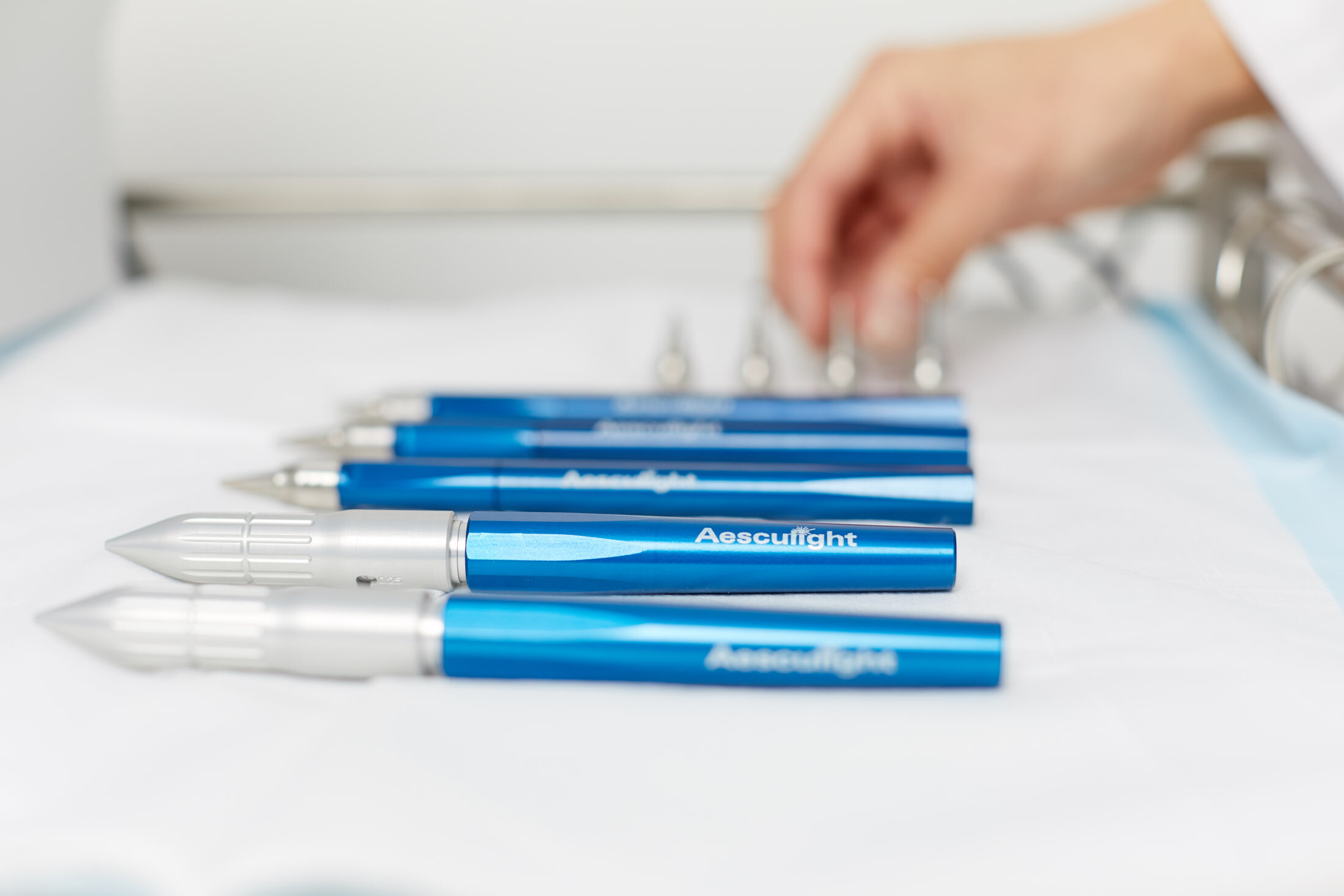
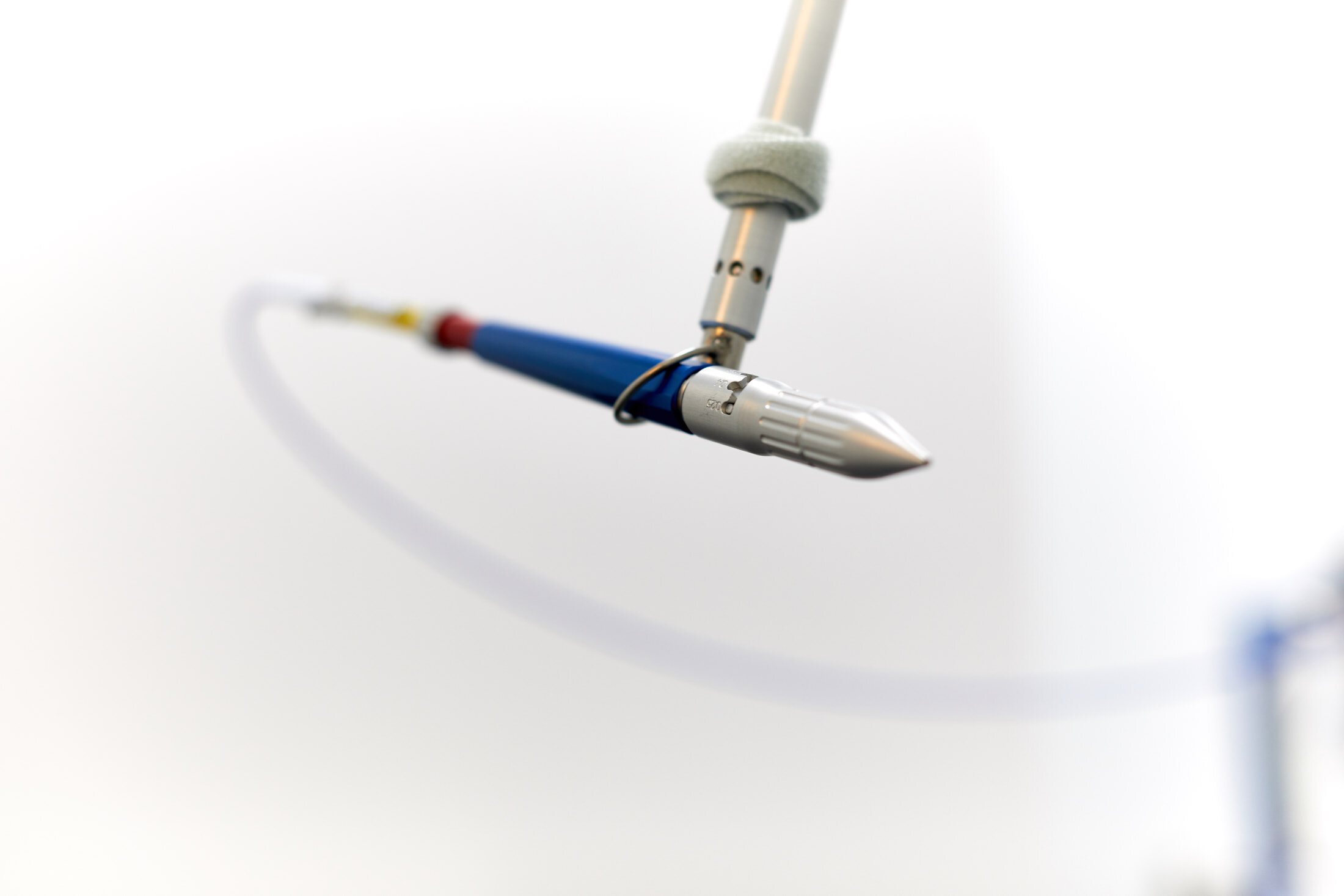
CO₂ (carbon dioxide) laser surgery uses a concentrated beam of infrared light instead of a traditional surgical blade to cut, remove or vaporise targeted tissue.
The laser energy is absorbed by water within the tissue, allowing the veterinarian to work very precisely. As the laser passes through tissue, it can seal small blood vessels, lymphatic vessels and nerve endings while also producing a local thermal effect at the surgical site.
This combination of precision and control makes CO₂ laser surgery particularly useful for many procedures involving the skin and other delicate areas.
Why might CO₂ laser surgery be recommended for my pet?
Depending on the condition and procedure being performed, CO₂ laser surgery can offer several advantages.
These may include:
Precise tissue removal – the laser allows the veterinary dermatologist to target abnormal tissue while limiting effects on surrounding healthy tissue.
Reduced bleeding – small blood vessels can be sealed as the laser cuts, helping to provide a clearer surgical field.
Reduced swelling – sealing of small lymphatic vessels may help minimise post-operative swelling.
Potentially less post-operative discomfort – the laser seals small nerve endings as it passes through tissue, which may help reduce discomfort following some procedures.
No surgical instrument contacting the tissue while cutting – the laser beam performs the incision or tissue ablation.
A local antimicrobial effect – the heat generated by the laser can reduce microorganisms at the point where it interacts with tissue.
Excellent control in delicate areas – its precision can be particularly valuable when treating small lesions or areas where preserving surrounding healthy tissue is important.
Not every skin condition requires laser surgery. Our veterinary dermatologists will assess your pet and recommend the most appropriate treatment based on the type, size and location of the lesion and your pet's individual circumstances.
What is CO₂ laser surgery used for?
At Animal Dermatology Clinic, CO₂ laser surgery may be considered for a variety of dermatological conditions, including:
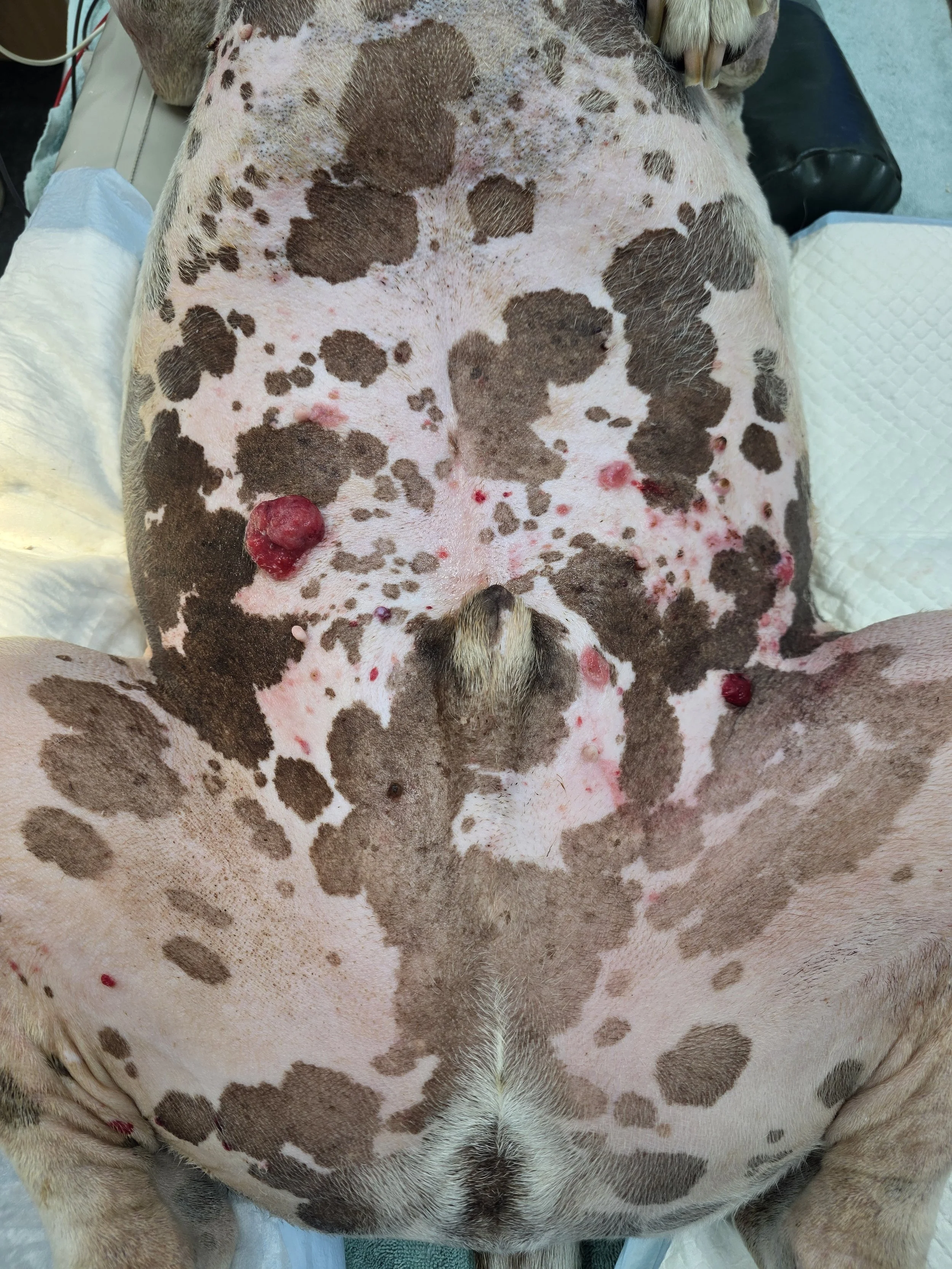
Removal of selected benign skin growths and tumours
Treatment of solar-damaged skin and selected actinic lesions
Removal or treatment of viral papillomas (warts)
Treatment of gingival hyperplasia in selected patients
Treatment of interdigital lesions, including selected cases of chronic interdigital furunculosis
Removal or reduction of other superficial skin lesions and abnormal tissue, where appropriate
The suitability of laser surgery depends on the individual condition. Some lumps and lesions may require sampling or biopsy before treatment so that we know what we are dealing with and can plan the most appropriate procedure.
What happens during laser surgery?
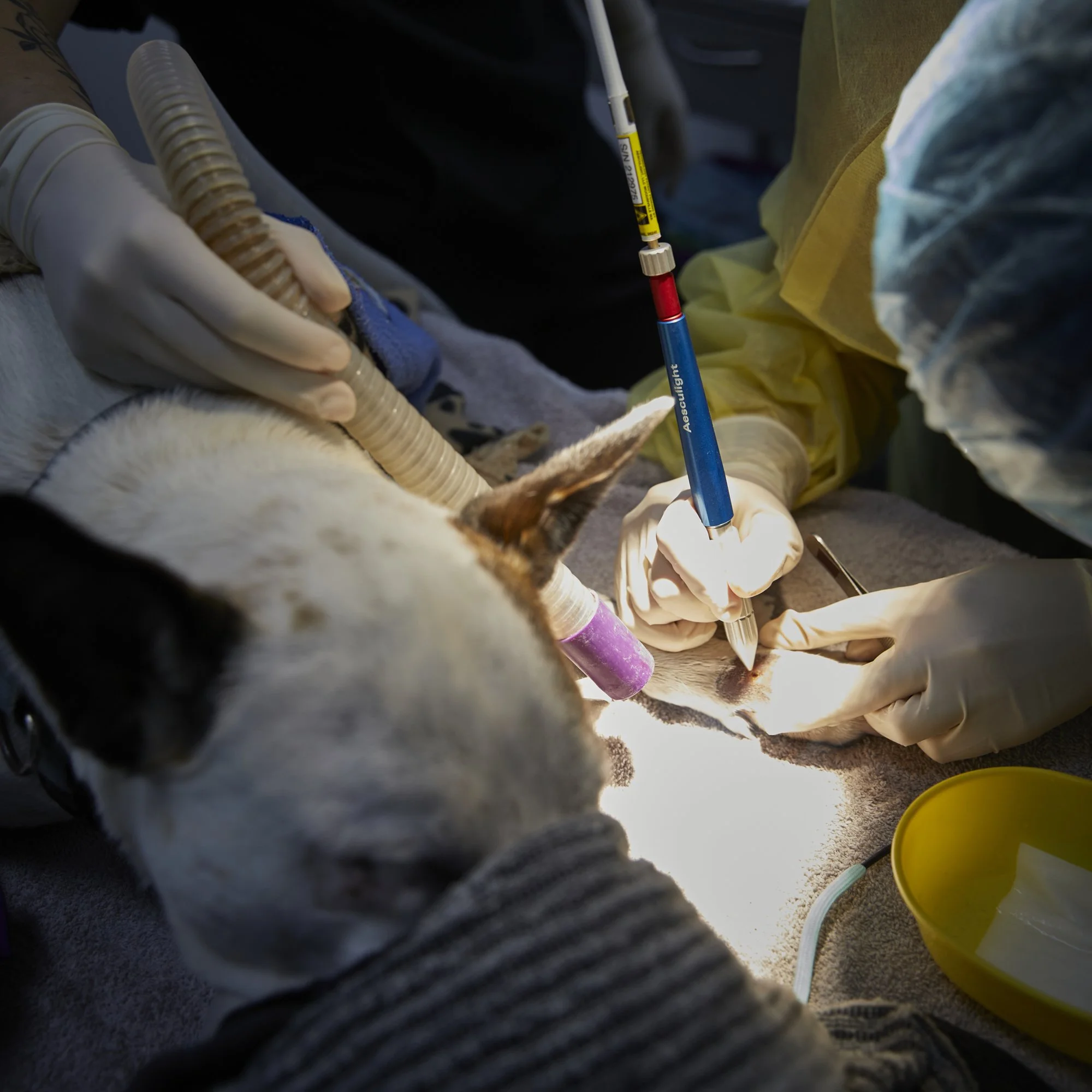
CO₂ laser surgery is performed under general anaesthesia.
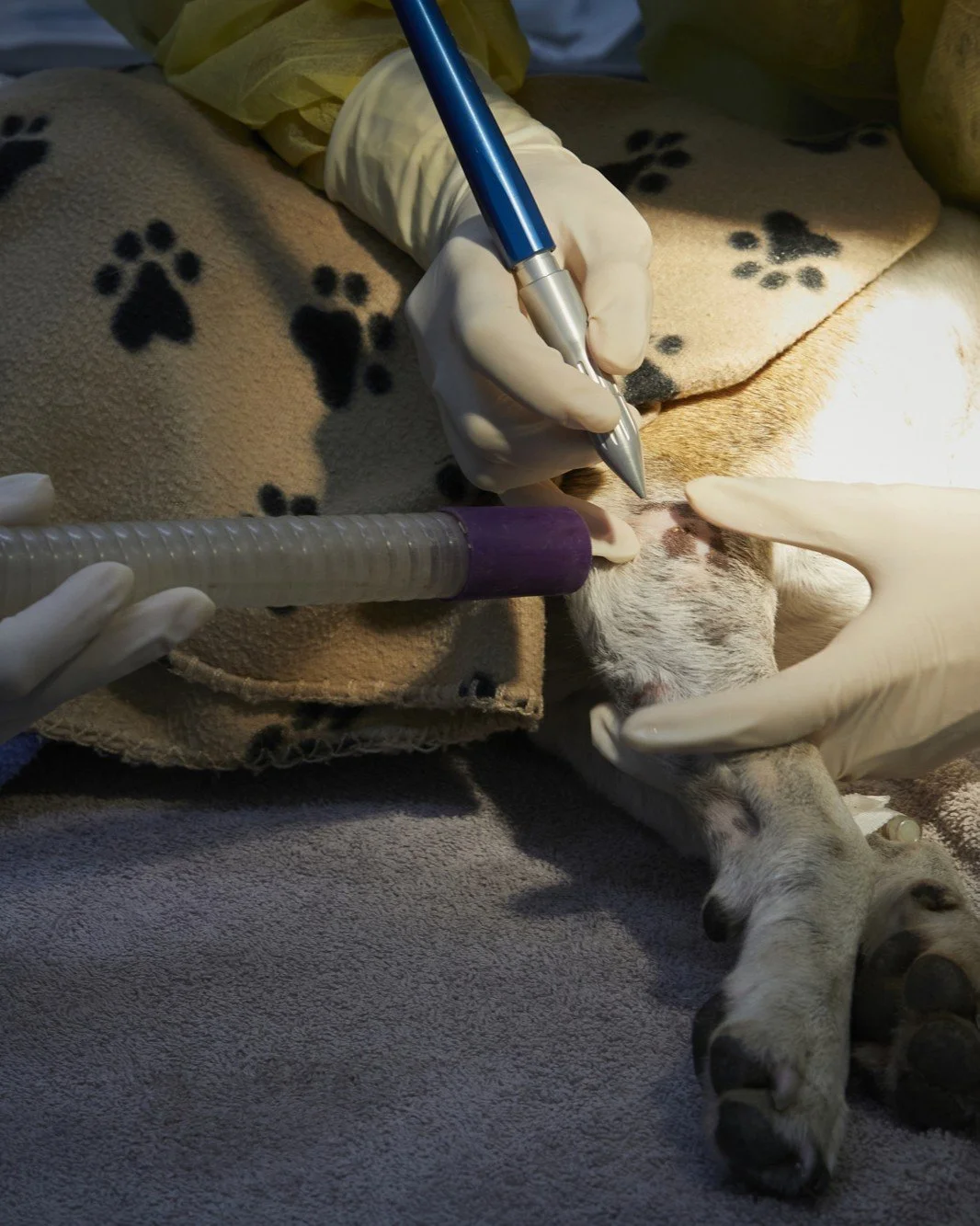
Our veterinary dermatologist carefully targets the affected tissue using the laser. The precision of the CO₂ laser allows us to treat the required area while preserving as much surrounding healthy tissue as possible.
Where appropriate, removed tissue may be submitted for histopathology, allowing a veterinary pathologist to examine it under a microscope and provide a diagnosis.
What happens after the procedure?
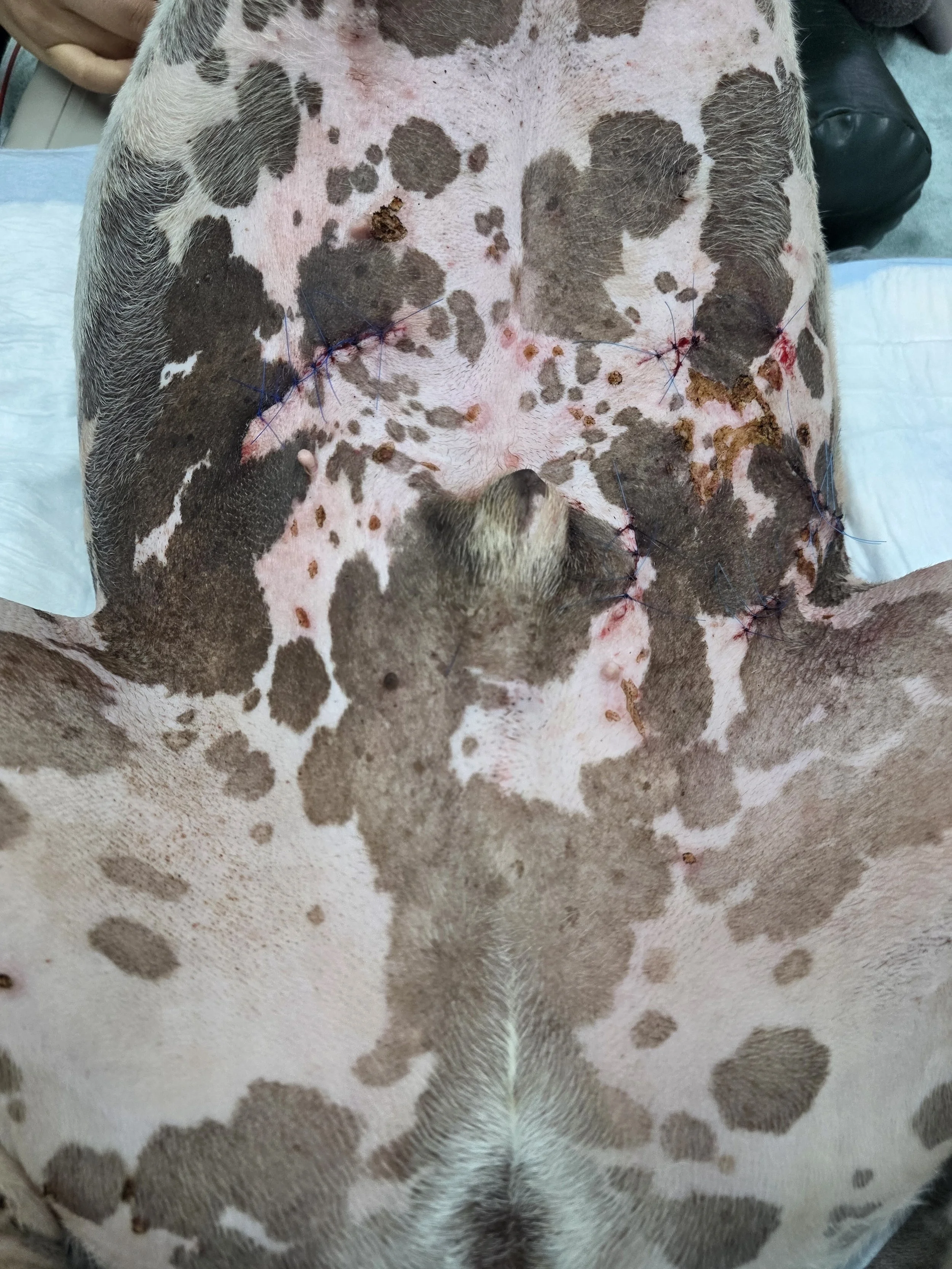
Recovery will depend on the condition being treated, the location and size of the treatment area, and your pet's individual needs.
Before your pet goes home, our team will provide you with specific aftercare instructions. These may include wound care, medication, activity restrictions and ways to prevent your pet from licking or scratching the treated area.
We'll also let you know when a follow-up examination is recommended so we can monitor healing and discuss any further treatment if required.


Is CO₂ laser surgery right for my pet?
Laser surgery is a useful tool, but it isn't necessarily the best option for every skin lesion or dermatological condition.
Our veterinary dermatologists will assess your pet's condition and discuss the available options with you. If CO₂ laser surgery is recommended, we'll explain why we believe it is appropriate, what the procedure involves and what you can expect afterwards.
Call now on: +61 08 6277 9430 (Murdoch) and (Balcatta) or email: dermnurses@adcperth.com