

Food Allergies in Dogs and Cats
Is your dog or cat constantly itchy, experiencing recurring ear infections or having ongoing gastrointestinal problems? A reaction to something in their diet could be contributing to their symptoms.
Food allergies can affect both dogs and cats. Unlike an immediate reaction to a new food, a food allergy can develop after a pet has been eating the same ingredient for some time so a familiar diet does not necessarily rule food allergy out.
What symptoms can we see?
Food allergy can look very similar to other allergic skin conditions, which is one reason it can be difficult to diagnose without a thorough investigation.
Signs may include:
Persistent itching, which may be generalised or concentrated in particular areas. In dogs, the face, ears, feet, armpits, abdomen and perineal area may be affected. In cats, the head, neck and ears are commonly affected.
Recurrent ear infections
Gastrointestinal signs, such as vomiting, diarrhoea, flatulence, increased mucus or blood in the stool, or straining to pass faeces. However, many pets with food allergy have no gastrointestinal symptoms at all.
How is a food allergy diagnosed?
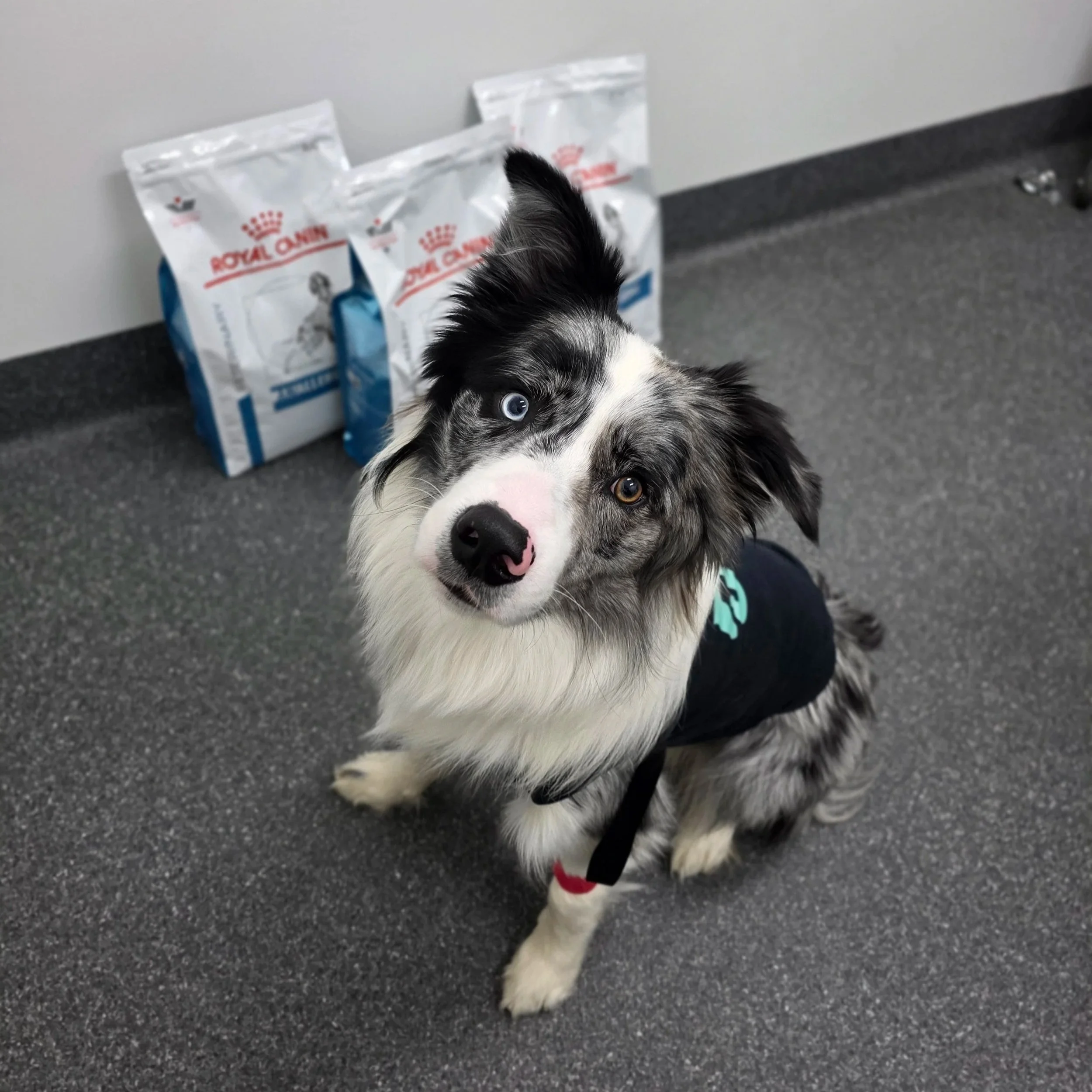
Unfortunately, commercial skin and blood tests, as well as saliva tests relating to food are unreliable. Food allergies can only be diagnosed by an elimination diet. Many commercial diets recommended for allergic dogs and cats are ineffective. Your veterinary dermatologist has expert training in cat and dog allergy testing, and will be able to give you the best advice as to which diet to select. An extensive review of your pet’s dietary history is critical. This will include an analysis of their usual diet, as well as other dog or cat foods in multiple animal households, pet treats, dietary supplements and chewable or flavoured heartworm preventative medications.
Choosing the right diet is important. Before starting a trial, we take a detailed dietary history to determine everything your pet eats or may have access to. This can include:
Their regular food
Previous diets
Treats and chews
Food belonging to other pets in the household
Table scraps
Dietary supplements
Flavoured or chewable medications and preventatives
Based on this history, your veterinary dermatologist will recommend an appropriate elimination diet for your individual pet.
During the trial, it is important that your pet eats only the recommended diet and approved items. Even small amounts of other foods, treats or flavoured medications can interfere with the trial and make the results difficult to interpret.
How long does an elimination diet take?
An elimination diet trial for suspected food allergy is generally carried out for eight weeks.
We will guide you through the process and monitor your pet's response. If their symptoms improve sufficiently during the elimination diet, the next stage may involve reintroducing their previous food to determine whether the symptoms return. This dietary challenge is an important part of confirming a food allergy.
How is food allergy managed?
If a food allergy is confirmed, management involves avoiding the ingredient or ingredients that trigger your pet's symptoms.
Your veterinary dermatologist will help you select an appropriate long-term diet that meets your pet's nutritional needs while avoiding their identified dietary triggers.
For pets with more than one type of allergy or an additional skin or ear condition, we can also develop a management plan to address those problems alongside their diet.
Could food be contributing to your pet's skin or ear problems?
If your dog or cat has persistent itching, recurring ear infections or other symptoms that aren't resolving, specialist dermatology assessment can help determine what may be contributing to the problem.
Do you think your dog or cat has a food allergy? Bring them in for a consultation. We treat your pet like one of our own. Call now on: +61 08 6277 9430 (Murdoch) and (Balcatta) or email: dermnurses@adcperth.com